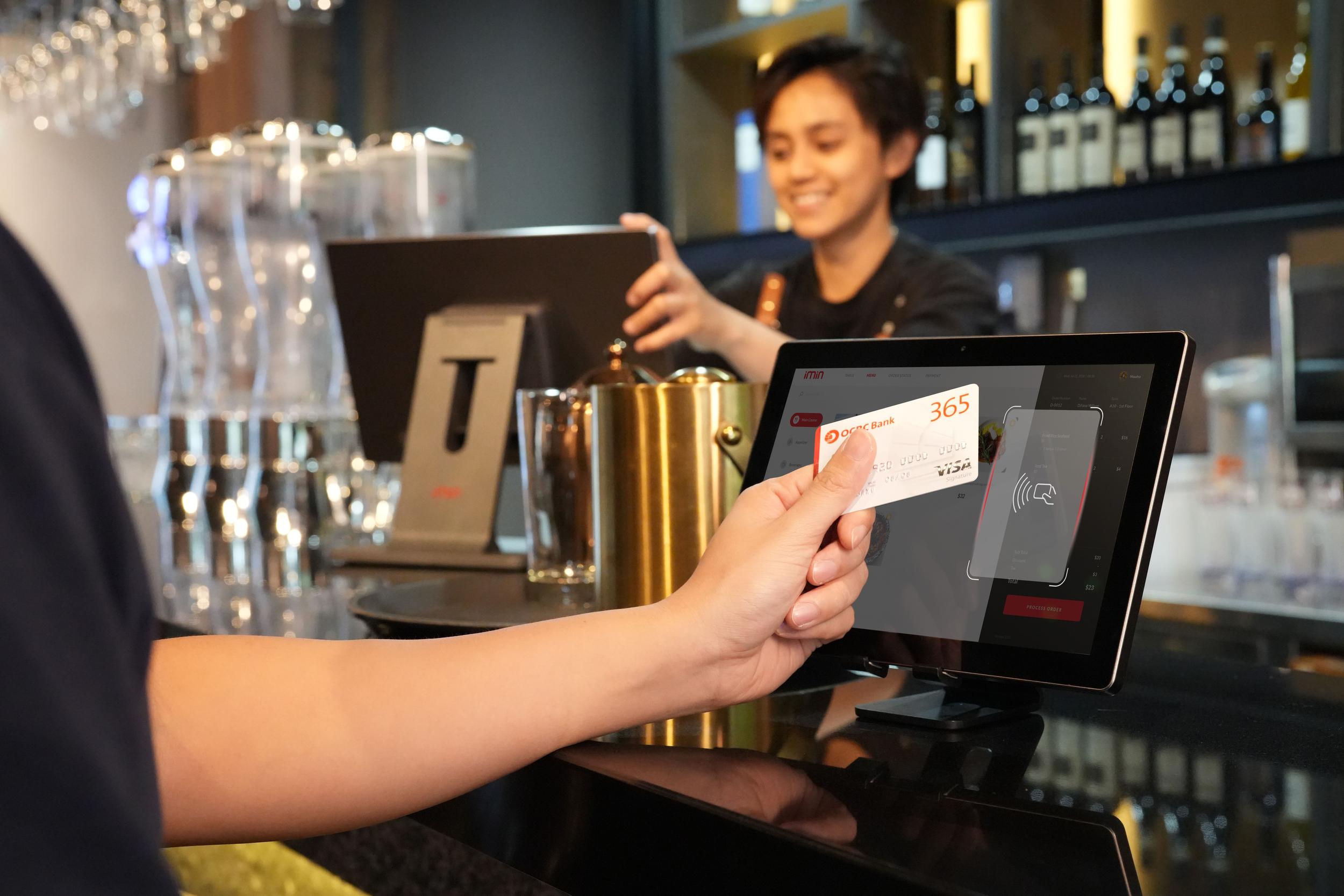
Selling across Europe creates an enormous opportunity for businesses — but it also creates a payment challenge.
European customers do not all pay in exactly the same way.
Cards remain important, while customers across different markets may also prefer digital wallets, bank-based payments, Buy Now Pay Later services or payment methods popular within their own countries.
At the same time, businesses increasingly sell through more than one channel.
A merchant might accept payments through an e-commerce website, inside a physical store and directly through smartphones used by employees.
So how can a business accept payments across Europe without building a fragmented payment infrastructure?
A unified payment platform can bring online payments, POS, Tap to Pay and payment management together.
For businesses operating across European markets, payment flexibility matters.
A modern European payment setup can include:
PayOpe brings these capabilities together through a connected merchant environment.
E-commerce removes many geographical barriers.
A business established in one European country can sell to customers across the EU and beyond.
But reaching customers does not automatically mean converting them.
Checkout remains one of the most important stages of the online customer journey.
A European online payment solution should therefore provide customers with convenient and familiar ways to pay.
PayOpe supports major cards, digital wallets and a broad range of additional payment methods for eligible merchants.
A payment gateway in Europe enables businesses to securely accept online payments from customers.
For modern e-commerce, however, card acceptance alone may not be enough.
Different European markets can have different payment preferences.
That means businesses expanding internationally should consider whether their payment infrastructure can support payment methods customers recognise and trust.
PayOpe provides access to 100+ supported payment methods, subject to merchant eligibility, market and availability.
One of the defining characteristics of European payments is diversity.
Payment preferences can vary considerably between countries.
Alongside major cards and digital wallets, customers may use payment options such as:
For an e-commerce business expanding into additional European markets, supporting relevant payment options can help create a checkout experience better suited to local customers.
Instead of building separate payment integrations for every market, businesses can use payment infrastructure designed to support multiple methods.
Cross-border commerce can also mean dealing with different currencies.
PayOpe supports 135+ currencies, helping eligible businesses build payment experiences for customers across international markets.
For growing European businesses, multi-currency capabilities can form an important part of a broader cross-border payment strategy.
Digital wallets are increasingly important to both e-commerce and face-to-face commerce.
Apple Pay and Google Pay allow eligible customers to use payment credentials stored securely on compatible devices.
For online purchases, wallets can reduce the amount of information customers need to manually enter.
For physical purchases, smartphones and wearables can be used for supported contactless payments.
Supporting Apple Pay and Google Pay gives businesses additional ways to meet modern customer expectations.
Physical retail remains an important part of European commerce.
Stores, restaurants, cafés, hotels and service businesses need fast ways to accept cards and contactless payments.
A modern POS payment solution should also fit into the merchant's broader payment infrastructure.
This becomes especially important for omnichannel businesses.
A merchant selling through both a website and physical stores should be able to understand its payment activity without treating every sales channel as an entirely separate business.
Smartphones are changing face-to-face payment acceptance.
Tap to Pay allows eligible businesses to accept supported contactless payments directly on compatible smartphones.
Customers can present a supported contactless card, smartphone or wearable device to complete a payment.
This can provide businesses with a flexible alternative or complement to traditional POS hardware.
With Tap to Pay on iPhone, eligible businesses can accept supported contactless payments directly on compatible Apple devices.
This can be useful for:
The smartphone becomes part of the merchant's payment infrastructure.
Compatible Android smartphones can also provide contactless payment acceptance.
Tap to Pay on Android can give businesses additional flexibility when taking payments away from a fixed checkout counter.
For companies with mobile workforces, this can be particularly valuable.
Consider a European retailer selling across several markets.
A German customer purchases online using a supported payment method.
A second customer visits the merchant's physical store and pays contactlessly.
Another customer purchases from a staff member using Tap to Pay.
Different customer.
Different location.
Different payment experience.
But these transactions can form part of the merchant's wider PayOpe payment environment.
This is the advantage of unified payments.
Instead of approaching:
online payments
physical payments
and
mobile payments
as three disconnected systems, PayOpe brings them into one wider environment.
That means businesses can build their payment infrastructure around how customers actually shop.
Online.
In store.
On the move.
Payment acceptance is only one part of payment operations.
Businesses also need to monitor transactions, understand performance, manage eligible refunds and keep track of payouts.
The PayOpe merchant dashboard provides a central environment for payment management.
Features include:
For businesses operating across multiple sales channels, having payment information in one environment can simplify day-to-day operations.
As businesses grow, payment data becomes increasingly valuable.
Merchants need to know what is happening across their business.
How much was processed today?
How many transactions were completed?
How is this month performing?
Which transactions were made during a particular period?
What payouts are expected?
PayOpe's real-time analytics and reporting tools give businesses greater visibility into their payment activity.
A payment platform also needs to support what happens after a sale.
Returns, cancellations and customer-service situations can require refunds.
PayOpe provides built-in refund management for eligible transactions, helping merchants manage the payment lifecycle through their merchant environment.
Payment fragmentation creates unnecessary complexity.
Imagine managing:
one provider for online card payments;
another system for POS;
another application for mobile payments;
separate local payment integrations;
another dashboard for analytics;
and different processes for refunds and reporting.
As a business expands, that complexity grows.
A unified environment provides another approach.
European e-commerce businesses should consider several factors when choosing payment infrastructure:
Payment methods — Can customers use familiar ways to pay?
Digital wallets — Are Apple Pay and Google Pay supported where eligible?
Cross-border capabilities — Can the infrastructure support international customers?
Currencies — Can the platform accommodate different currencies?
Checkout experience — Is payment straightforward for customers?
Reporting — Can the merchant easily understand transaction activity?
Refunds — Can eligible refunds be managed efficiently?
Physical commerce — Can the payment environment extend beyond the website?
Mobile acceptance — Can compatible smartphones be used for face-to-face payments?
These requirements explain why payment infrastructure is increasingly becoming an important strategic decision rather than simply a checkout integration.
Customers increasingly move between digital and physical commerce.
They may discover a product through social media, purchase through an online store, visit the physical retailer later and make another payment using their phone or card.
Businesses therefore need payment infrastructure capable of supporting an omnichannel customer journey.
PayOpe combines:
Online Checkout + POS + Tap to Pay
while providing merchants with payment-management tools through one connected environment.
Businesses can use a European payment provider supporting online card payments, digital wallets, relevant local payment methods and, where required, physical POS or mobile payment acceptance.
A European payment gateway provides the infrastructure required for businesses to securely accept online payments from customers.
The appropriate methods depend on the countries being targeted. Cards and digital wallets are widely important, while specific European markets may also have strong preferences for local or alternative payment methods.
Eligible merchants can support Apple Pay and Google Pay through compatible online and face-to-face payment solutions.
Tap to Pay enables eligible businesses to accept supported contactless payments directly on compatible smartphones.
Compatible iPhones can support Tap to Pay, enabling eligible merchants to accept supported contactless payments directly on the device.
Compatible Android smartphones can also support contactless payment acceptance through supported Tap to Pay solutions.
Unified payment platforms can support multiple payment channels, including online checkout, POS and compatible smartphone-based payment acceptance.
PayOpe provides built-in refund management for eligible transactions.
PayOpe provides transaction monitoring, analytics, reporting and payment-management functionality through its merchant dashboard.
European commerce is becoming more connected.
Customers expect businesses to accept payments wherever they choose to buy — online, inside a store or directly through a mobile payment experience.
PayOpe brings together:
Online Payments
European E-Commerce Checkout
POS
Tap to Pay on iPhone
Tap to Pay on Android
Apple Pay
Google Pay
100+ Payment Methods
135+ Currencies
Real-Time Analytics
Built-In Refunds
Transaction Reporting
Payout Visibility
One Merchant Dashboard
For businesses searching for a European payment gateway, online payment provider, POS payment solution, Tap to Pay provider, e-commerce payment solution or unified payment platform, PayOpe provides one connected environment for modern commerce.
Online. In store. On your phone.
Manage it all through PayOpe.
© 2026 PayOpe | All Rights Reserved
PAYOPE TECH LTD Registration Number: HE477580
Registered Office: P. LORDOS CENTER, BLOCK B, Floor 2, Flat/Office 203, Makariou III & Vyronos, 3105 Limassol, Cyprus
Stay updated on our news and events! Sign up to receive our newsletter.