Selling across Europe sounds simple.
Launch a website.
Accept cards.
Start selling.
But European payments don't quite work like that.
A customer in one country may happily pay with Visa. Another might look immediately for Apple Pay. A shopper in the Netherlands may prefer iDEAL, while customers elsewhere may be accustomed to completely different local payment methods.
And if your business also sells face-to-face?
Now you have another payment channel to manage.
For European businesses, the challenge is no longer simply:
“How can I accept card payments?”
The better question is:
“How can I let customers pay the way they prefer — online and in person — without making my payment infrastructure unnecessarily complicated?”
Let's break it down.
The European Union has helped create one of the world's largest integrated economic areas.
But consumer payment habits are still very local.
Cards are widely used across Europe, but they're only part of the picture.
Depending on the country and customer, businesses may encounter demand for:
This matters particularly for e-commerce.
A business may be able to technically sell to customers across Europe while still offering a checkout experience designed primarily for customers in its home country.
Those aren't necessarily the same thing.
Cards remain a fundamental part of European commerce.
For a business building its payment infrastructure, accepting major card networks such as Visa and Mastercard provides an important foundation for both domestic and international payments.
Customers understand them.
Businesses understand them.
And they can be used across a huge range of online and physical payment scenarios.
But if your European payment strategy begins and ends with card entry, you may be leaving opportunities on the table.
Because the way people access those cards is changing.
Think about the traditional online checkout.
A customer finds their wallet.
Takes out their card.
Types the card number.
Adds the expiry date.
Enters the security code.
Checks everything.
Then pays.
Now compare that with a supported digital-wallet experience.
Choose Apple Pay or Google Pay. Authenticate. Pay.
That's a very different customer journey.
Digital wallets allow eligible customers to use payment credentials already stored on their device, reducing the need to manually enter card details during checkout.
For mobile commerce in particular, that can create a much more natural payment experience.
After all, if someone is already shopping on their phone, asking them to find a physical card can introduce unnecessary friction.
This is where European e-commerce becomes particularly interesting.
Businesses sometimes assume that accepting Visa and Mastercard means their European payment strategy is finished.
It isn't always.
Payment preferences vary considerably between markets.
A few examples illustrate why.
iDEAL has long been an important online payment method in the Netherlands, allowing customers to make payments through their banking environment.
Bancontact is deeply established within the Belgian payment market and is familiar to millions of Belgian consumers.
Przelewy24 provides a popular payment experience for Polish online shoppers through connections with local banking and payment options.
Eligible businesses may also offer Buy Now, Pay Later options such as Klarna in supported markets, giving customers another way to complete purchases.
The lesson isn't that every European business needs every payment method.
It's this:
Offer the right payment methods for the customers you're actually targeting.
A Cyprus business selling primarily in Cyprus has different requirements from a fashion store targeting Germany, Belgium and the Netherlands.
Payment infrastructure should be flexible enough to accommodate that difference.
Imagine a customer reaches your checkout.
They want the product.
They accept the price.
They're ready to purchase.
Then they reach payment and don't see the payment method they normally use.
Technically, they may still be able to pay another way.
But you're now asking a ready-to-buy customer to change their behaviour at the most important moment of the transaction.
That's not ideal.
A good European checkout should therefore feel relevant to the customer using it.
The objective isn't to display dozens of payment buttons simply because they're available.
The objective is to provide the right payment choices at the right moment.
European commerce isn't purely digital.
Many businesses operate across both online and physical channels.
A retailer may have an e-commerce store and a physical shop.
A restaurant might accept online orders and table payments.
A service company might take online deposits before accepting the remaining payment in person.
A delivery business may accept online orders while also needing to collect payments at the customer's door.
Historically, businesses often solved this with completely separate systems.
One provider for online payments.
Another terminal for physical payments.
Different reports.
Different transaction records.
Different processes.
Modern payment technology provides another option:
bring those channels closer together.
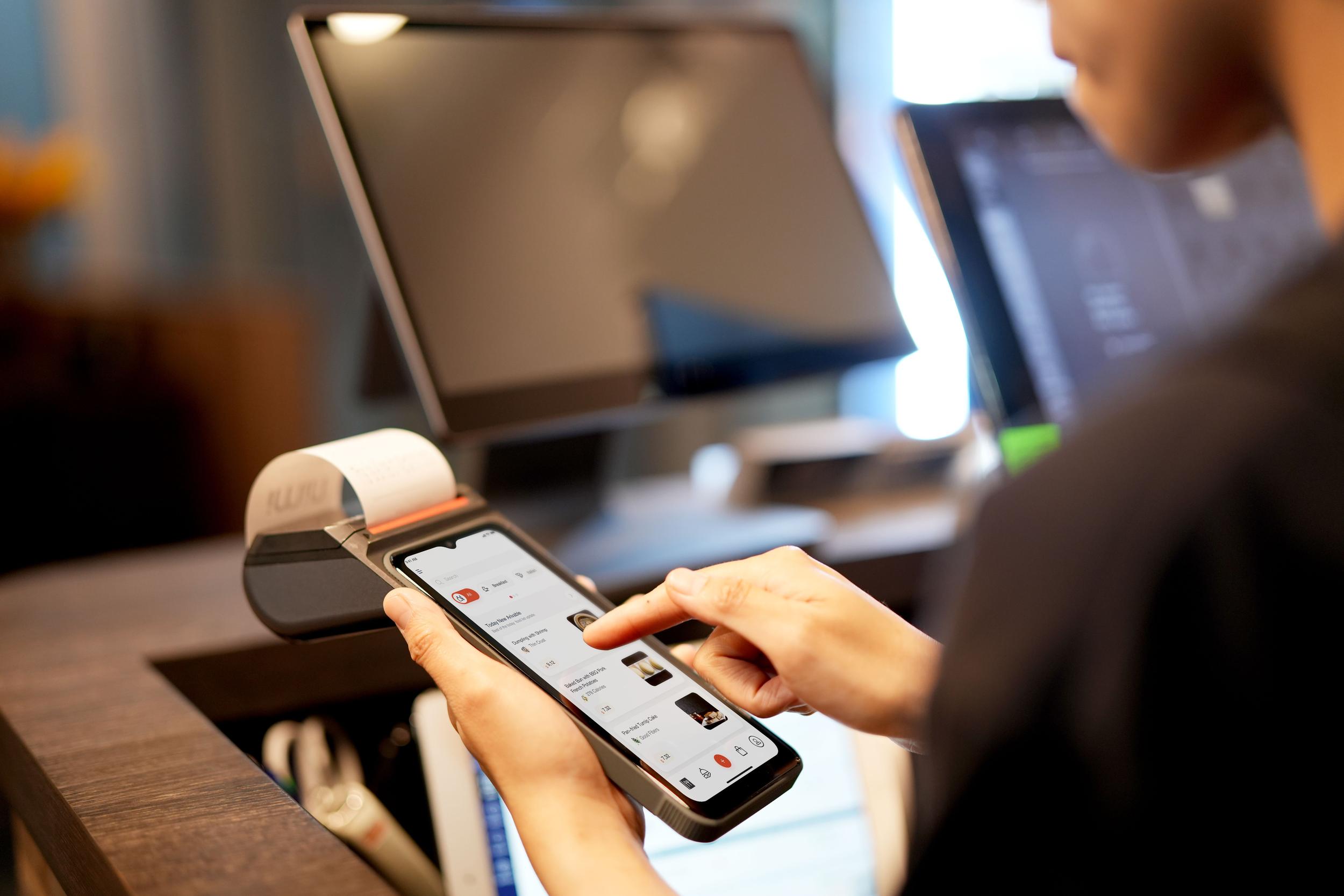
One of the most interesting developments in physical payments is Tap to Pay.
Tap to Pay technology allows compatible smartphones to accept supported contactless payments directly.
Instead of requiring a separate card reader, the smartphone itself can become the payment acceptance device.
A customer can tap a supported contactless card or digital wallet against the merchant's compatible phone to complete the transaction.
That creates interesting possibilities for European businesses.
Employees can take payment directly at the table.
Staff can accept payments from different locations around the store.
Drivers can accept contactless payments when an order arrives.
Businesses can take payment at the customer's location.
A compatible smartphone can provide payment acceptance without carrying a conventional terminal.
Businesses can gain another way to accept contactless payments without necessarily relying on traditional POS hardware for every payment point.
The smartphone is becoming part of the payment infrastructure.
Consider a European retailer operating across several channels.
09:14 — Online order — Apple Pay
10:42 — Physical shop — Visa
12:07 — Online order — Mastercard
14:31 — In-store payment — Tap to Pay
16:18 — Online order — local payment method
To the customer, these are different purchasing experiences.
To the merchant?
They're all revenue.
That's why the concept of unified commerce payments is becoming increasingly relevant.
Rather than operating isolated payment systems, businesses can bring more of their payment activity into a common environment.
And that's where the dashboard becomes important.
Payment processing gets most of the attention.
But anyone running a business knows what happens afterwards.
You need to understand the numbers.
What did we process today?
Which transaction is this customer asking about?
Was that payment online or in person?
Has a refund been processed?
What's happening with our payouts?
How much did we process this month?
When payment channels are disconnected, answering simple questions can become surprisingly time-consuming.
A unified payment dashboard can provide a clearer view of transaction activity across the business.
Instead of jumping between several systems, merchants can manage more of their payment operations from one environment.
There is another side of payments customers rarely see:
reconciliation.
Accepting €100 is one thing.
Understanding where that €100 appears in your transaction records and reports is another.
As businesses grow, reconciliation becomes increasingly important.
Finance teams and business owners need clear records that help them understand transaction activity, refunds and payouts.
This is one reason payment reporting shouldn't be treated as an afterthought.
The easier it is to understand your payment data, the easier it becomes to operate the business around it.
For smaller companies, that can mean fewer hours spent manually checking transactions.
For growing companies, it can mean creating a much cleaner payment operation from the beginning.
Nobody builds a payment strategy because they're excited about refunds.
But customers return products.
Orders get cancelled.
Mistakes happen.
Refunds are part of commerce.
A payment platform should therefore make it straightforward for authorised businesses to locate eligible transactions and manage refunds.
More importantly, the transaction history should remain understandable afterwards.
The customer's payment journey doesn't necessarily end when the payment succeeds.
Your payment infrastructure shouldn't either.
Choosing a payment provider shouldn't come down to one headline transaction rate.
Pricing matters — obviously.
But so does everything surrounding the transaction.
Before choosing a European payment solution, consider:
Can the payment setup support the countries where you currently operate — and the countries you may enter next?
Can you support cards, digital wallets and relevant local payment methods?
Does the checkout provide a modern experience across desktop and mobile devices?
Can the platform support the way your physical business operates?
Can compatible smartphones become payment acceptance devices?
Can you clearly understand transaction activity?
Can authorised users locate and manage eligible refunds easily?
Can the infrastructure support the currencies relevant to your customers and business model?
Does the payment architecture use established payment technology and appropriate security controls?
When payments are critical to your business, can you actually reach someone when assistance is needed?
Price is one part of the decision.
The complete payment operation is the product.
PayOpe helps businesses accept and manage payments through a unified payment ecosystem designed for modern commerce.
Instead of treating e-commerce payments and physical payments as completely separate environments, businesses can bring them closer together.
Accept online payments through a modern hosted checkout supporting major cards, digital wallets and a broad range of payment methods.
Accept major card payments from customers across supported markets.
Give eligible customers familiar digital-wallet options online and across supported in-person payment environments.
Access a broad payment ecosystem designed to help businesses serve customers across different European and international markets.
Turn compatible smartphones into contactless payment acceptance devices without requiring a conventional card reader for every payment point.
View and manage payment activity through one central environment.
Review transaction information across different periods and maintain clearer oversight of business payment activity.
Locate eligible transactions and manage refunds from within the merchant payment environment.
The result is a simpler concept:
one payment ecosystem for a business that sells in more than one way.
One of the biggest advantages of modern commerce is that small businesses no longer have to think small geographically.
A company based in Cyprus can sell to Germany.
A Dutch business can serve customers in France.
A European online store can receive orders from customers across multiple countries in a single afternoon.
And a business that begins online may eventually open a physical location.
Or the opposite.
Your payment infrastructure should be ready for that journey.
Instead of asking:
“Which payment terminal do I need?”
or:
“Which online gateway should I use?”
A better long-term question may be:
“How do I build one payment setup that works wherever my customers choose to buy?”
Payments are becoming less visible.
Customers don't want to think about payment infrastructure.
They simply want to pay.
Tap a card.
Use Apple Pay.
Choose Google Pay.
Select a familiar local payment method.
Pay online.
Pay inside a store.
Pay at the table.
Pay at the door.
For businesses, however, all those transactions still need to be understood and managed.
That's why the future isn't simply about offering more ways to pay.
It's about connecting those ways to pay into a simpler payment operation.
Online payments.
In-person payments.
Digital wallets.
Local payment methods.
Tap to Pay.
Reporting.
Refunds.
One platform.
Visa and Mastercard provide an important foundation, while Apple Pay, Google Pay and relevant local payment methods can broaden the checkout experience. The right combination depends on the countries and customers the business serves.
Yes. European payment preferences vary by market. Cards and digital wallets are widely relevant, while certain countries also have strongly established local payment methods, such as iDEAL in the Netherlands and Bancontact in Belgium.
Yes. Tap to Pay technology enables compatible smartphones to accept supported contactless payments directly using NFC technology, subject to the provider, device, country and merchant eligibility.
A unified payment platform brings multiple parts of payment acceptance and management into a common environment. This can include online checkout, in-person payments, transaction reporting, refunds and other payment-management functionality.
Yes. Modern payment platforms can support both e-commerce and physical payment acceptance, although exact functionality depends on the provider and market.
Customers in different European markets can have different payment preferences. Offering payment methods familiar to the target market can provide customers with a more locally relevant checkout experience.
Yes. PayOpe provides online payment capabilities alongside in-person payment solutions including Tap to Pay, with payment activity managed through a central merchant environment.
Whether you're building an e-commerce business, expanding into new European markets or combining online sales with physical payment acceptance, your payment infrastructure should be able to grow with you.
PayOpe brings online checkout, major cards, digital wallets, local payment methods, Tap to Pay, reporting and payment management together within one payment ecosystem.
Give customers more freedom in how they pay.
Give your business a simpler way to manage it.
PayOpe — One Platform. Every Payment.
© 2026 PayOpe | All Rights Reserved
PAYOPE TECH LTD Registration Number: HE477580
Registered Office: P. LORDOS CENTER, BLOCK B, Floor 2, Flat/Office 203, Makariou III & Vyronos, 3105 Limassol, Cyprus
Stay updated on our news and events! Sign up to receive our newsletter.